Augmented Reality for Co-Creating Greener Built Environments
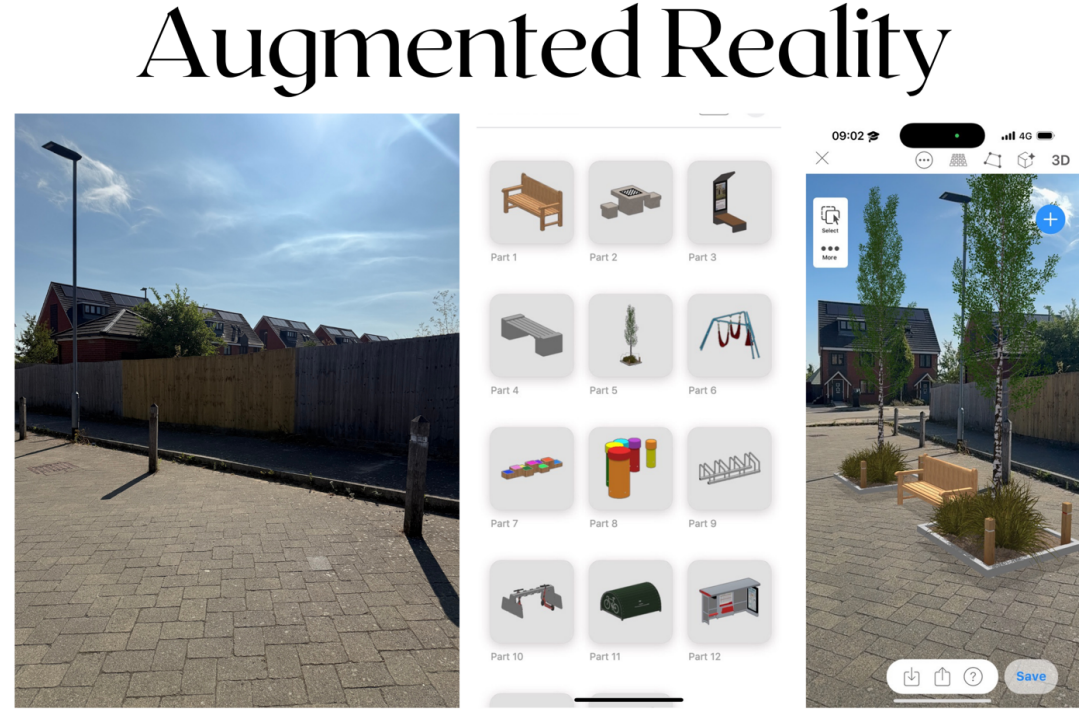
As cities confront the intertwined pressures of climate change, biodiversity loss, urban overheating, and social inequality, the question is no longer whether greener built environments are needed, but how they can be designed in ways that are inclusive, evidence-informed, and responsive to people’s lived experience. My recent work has explored this challenge through the lens of augmented reality (AR), not simply as a visualisation technology, but as a participatory medium for co-creating greener urban futures. This direction was sharpened through my RECLAIM secondment with University College London, where the development of an AR toolkit for green public spaces was discussed around community engagement, iterative testing, and cross-sectoral knowledge exchange.
At the heart of this work is a simple but important proposition: conventional approaches to planning and designing green infrastructure often struggle to make proposed changes tangible to non-expert stakeholders. Drawings, maps, and even sophisticated 3D models can remain abstract, particularly when discussions involve the future transformation of everyday public spaces. AR offers a different mode of engagement. By enabling real-time visualisation and interaction within the physical environment itself, it allows people to see, question, and shape potential interventions in situ. In this sense, AR becomes more than a representational tool; it becomes a platform for dialogue, negotiation, and shared decision-making. The secondment proposal captured this clearly through its ambition to develop an AR toolkit that would allow stakeholders to immerse themselves in and contribute directly to the design of green public spaces.
What became increasingly clear during this process is that co-creation is not achieved merely by introducing digital technology into participatory practice. It requires careful attention to usability, accessibility, and the social conditions through which participation takes place. The proposed secondment work plan therefore moved beyond a purely technical exercise. It began with reviewing the wider landscape of AR applications in urban design, then shifted towards creating and refining a toolkit specifically tailored to intuitive manipulation of green public spaces, followed by testing in diverse settings and the production of practical guidance for wider application. This progression reflects an important research principle: if immersive technologies are to support greener built environments meaningfully, they must be grounded in iterative engagement with real users, real places, and real decision contexts.
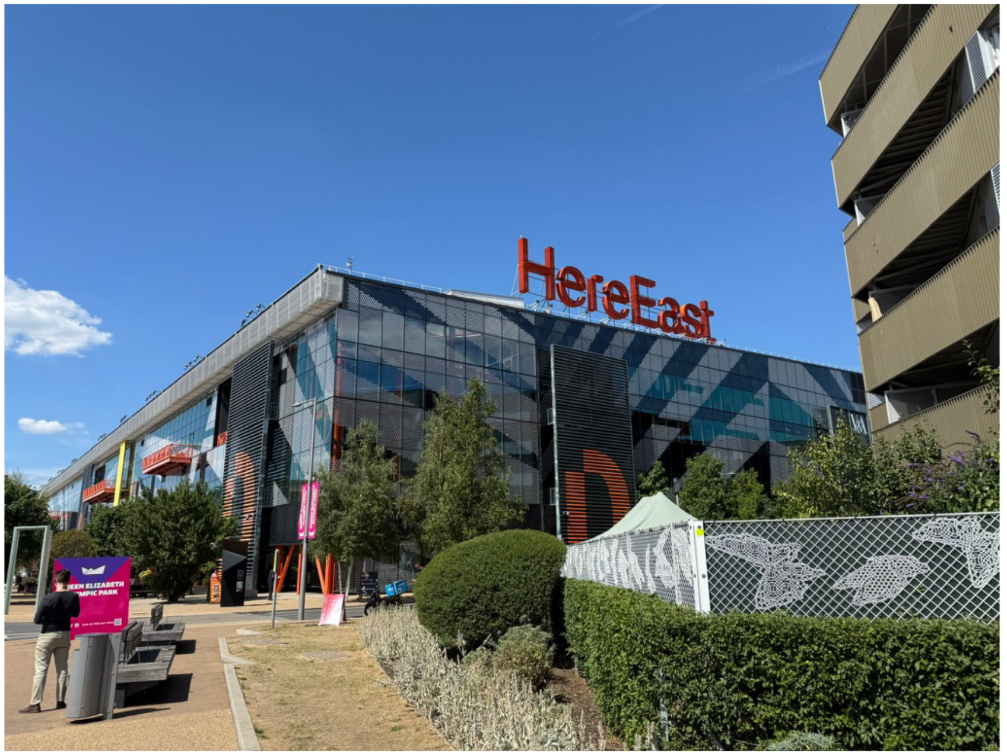
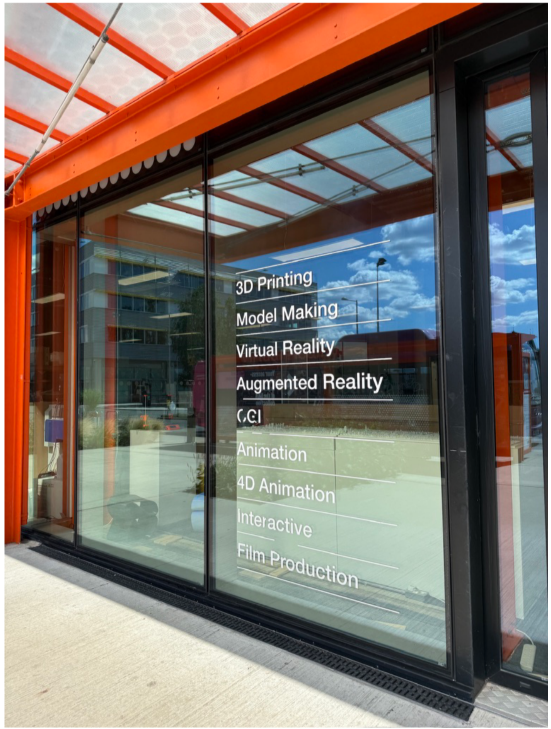
A particularly valuable influence of the secondment was its interdisciplinary framing. Hosted at UCL and shaped through engagement with the HERE laboratory, the work was positioned at the intersection of digital innovation, environmental psychology, urban design, and policy relevance. Common debates about greener urban environments are reduced to quantitative provision alone: more trees, more planting, more green coverage. While these are important, they do not fully capture how people perceive, inhabit, and value green space. By placing AR within a human-environment research context, this shifts the focus from visual enhancement to experiential understanding. It suggested that the design of greener environments should also be socially legible, emotionally resonant, and behaviourally meaningful.
This has direct implications for how we think about greener built environments. Green infrastructure is often discussed in terms of performance, whether ecological, climatic, or infrastructural. Yet public acceptance and long-term success depend just as much on whether people feel represented in the design process and whether proposed changes respond to local aspirations and concerns. Augmented Reality can be a way of integrating natural and human capital into decision-making, while also embedding aesthetics and people’s needs into green-blue-grey infrastructure design. That is a significant conceptual move. It situates AR not as a novelty, but as a mediating tool through which ecological function, spatial design, and community values can be considered together.
Another important lesson from the secondment was the value of cross-sectoral exchange. The material repeatedly emphasised that the work was intended not only for academic development, but also for local councils, practitioners, and industry partners. This is especially relevant in the context of greener built environments, where implementation depends on collaboration across institutional boundaries. Urban greening projects often fail not because there is a lack of ambition, but because communication gaps remain between communities, designers, policymakers, and delivery bodies. An AR approached developed through interdisciplinary collaboration has the potential to narrow these gaps. It can provide a shared interface through which different actors test options, compare scenarios, and discuss trade-offs before physical changes are made. In that sense, the secondment reinforced my view that immersive technologies are most powerful when they function as boundary objects: connecting expertise, rather than replacing it.
The secondment also strengthened a more balanced research agenda in which methodological development, applied experimentation, and scholarly dissemination are treated as mutually reinforcing. Looking back, the most valuable influence of the RECLAIM secondment was it helped to reframe AR as part of a broader systems-based and people-centred approach to greener built environments. It reinforced the idea that urban greening should be co-created rather than prescribed, tested rather than assumed, and experienced rather than merely represented. In this framing, AR becomes a means of making future environmental possibilities visible and debatable in the present. That is where its real promise lies: not in spectacle, but in enabling more inclusive, informed, and imaginative forms of urban transformation.